
Gainesville Lawn Mowing Services
Choose our lawn mowing service for reliable, professional results that keep your yard looking its best all season long. We combine local expertise, attention to detail, and top-quality equipment to ensure your lawn is healthy, beautiful, and hassle-free.
Get a Free QuoteOur Gainesville Landscaping & Yard Care Services
When to Schedule Lawn Mowing in Gainesville, Georgia – Seasonal Guide
In Gainesville, Georgia, the timing of your lawn mowing routine is crucial for maintaining a healthy, vibrant yard. Thanks to our humid subtropical climate, grass growth surges from early spring through late fall, with peak mowing season typically running from March to October. Neighborhoods near Lake Lanier and the shaded streets of Riverside Drive often experience unique microclimates—cooler temperatures and higher humidity can extend the growing season, while areas like New Holland may see earlier frost dates that signal the end of active growth.
Local environmental factors play a significant role in determining the best mowing schedule. For example, heavy clay soils common in Gainesville retain moisture, which can encourage lush growth but also increase the risk of fungal issues if lawns are cut too short. Shade from mature oaks in Chattahoochee Estates or the rolling terrain near Brenau University can affect how quickly grass dries after rain, impacting mowing frequency. It's also important to stay informed about municipal guidelines and seasonal updates that may affect lawn care practices in your area.
Local Factors to Consider for Lawn Mowing in Gainesville
- Tree density and shade coverage (affects grass growth and moisture retention)
- Soil type (clay vs. sandy soils influence drainage and mowing needs)
- Terrain and slope (steep yards may require specialized mowing equipment)
- Precipitation patterns and drought risk
- Frost dates (typically late October to early November)
- Municipal restrictions or neighborhood association guidelines
Benefits of Lawn Mowing in Gainesville
Professional Lawn Care Expertise
Consistent and Reliable Scheduling
Enhanced Curb Appeal
Time and Effort Savings
Healthier, Greener Lawns
Eco-Friendly Landscaping Practices
Gainesville Lawn Mowing Types

Standard Lawn Mowing
-
Mulching Mower Service
-
Bagging and Clipping Removal
-
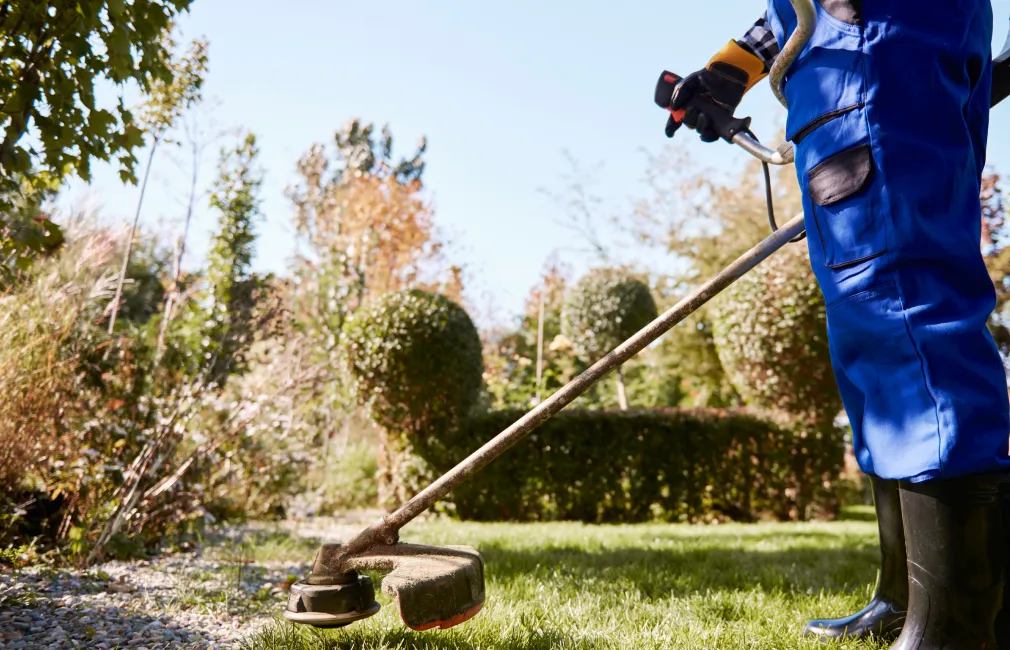
Edging and Trimming
-
Commercial Property Mowing
-
Seasonal Clean-Up Mowing
-
Eco-Friendly Electric Mowing
Our Lawn Mowing Process
Site Evaluation
Lawn Preparation
Mowing Execution
Edging and Trimming
Cleanup
Why Choose Gainesville Landscape Services

-
Gainesville Homeowners Trust Us
-
Expert Lawn Maintenance
-
Reliable Scheduling
-
Competitive Pricing
-
Professional Team
-
Satisfaction Guarantee
-
Personalized Service
Mowing Frequency and Turf Height Standards During Gainesville's Warm-Season Growth Period
Gainesville, Georgia, falls within USDA Hardiness Zone 7b, where warm-season grasses such as Bermudagrass and Zoysiagrass dominate residential and commercial turf. From late April through early October, active growth periods demand mowing intervals of 5 to 10 days to maintain optimal turf health. UGA Cooperative Extension recommends the following mowing heights by turf type:
- Bermudagrass: 1 to 1.5 inches for hybrid varieties; 1.5 to 2.5 inches for common types
- Zoysiagrass: 1 to 2 inches depending on cultivar
- Tall Fescue: 3 to 4 inches, particularly important during summer heat stress
Adhering to the one-third rule — never removing more than one-third of the blade in a single pass — prevents scalping and reduces stress on turf rooted in Gainesville's clay-influenced Piedmont soils. During drought periods, extending intervals to 14 days or more is appropriate to avoid compounding heat stress on dormant or semi-dormant turf.
Gainesville's Red Clay Soils and Their Effect on Mowing and Turf Compaction
Gainesville sits within Georgia's Piedmont physiographic region, where soils are predominantly Cecil and Pacolet series — red clay Ultisols with low organic matter, high compaction potential, and moderate to poor drainage in low-lying areas. According to the USDA Web Soil Survey, these soils have a naturally acidic pH ranging from 5.0 to 6.0, which affects turf density and root depth. Compacted clay soils create specific mowing challenges:
- Mower wheels can rut wet clay surfaces, particularly after Gainesville's frequent summer rainfall events
- Shallow root systems in compacted soils make turf more susceptible to scalping at standard mowing heights
- Clippings left on compacted clay surfaces may mat rather than decompose, increasing thatch accumulation
- Mowing should be avoided when soils are saturated to prevent surface damage and erosion
Property owners managing turf on sloped lots — common throughout Gainesville's hilly terrain — should use walk-behind equipment on grades exceeding 15 degrees to reduce slip hazards and prevent uneven cutting patterns.
Managing Clipping Discharge Near Gainesville's Stormwater Inlets and Creek Corridors
Gainesville's stormwater infrastructure connects directly to local waterways including Flat Creek, Wahoo Creek, and Lake Lanier tributaries. Grass clippings discharged into storm drains or deposited along drainage swales introduce nitrogen and phosphorus loads that degrade downstream water quality — a concern regulated under the Clean Water Act and monitored by the Georgia EPD Watershed Protection Branch. Practical clipping management standards include:
- Direct mower discharge away from curbs, gutters, storm drain inlets, and drainage ditches
- Blow or sweep clippings off paved surfaces immediately after mowing
- Mulch-mow where feasible to return fine clippings to the turf surface rather than generating loose debris
- Maintain a minimum 10-foot buffer from the edge of any drainage swale or creek bank before discharging clippings
The Gainesville Public Works Department oversees stormwater infrastructure maintenance throughout the city. Property owners and lawn care operators are responsible for ensuring that mowing debris does not enter the municipal stormwater system.
Gainesville Public Works Department
300 Henry Ward Way, Gainesville, GA 30501
Phone: (770) 535-6870
Official Website: Gainesville Public Works Department
Noise Ordinance Compliance and Equipment Operation Hours in Gainesville
Gainesville's municipal code establishes standards for noise generated by lawn maintenance equipment in residential zones. Property owners and lawn care operators should be aware that power equipment — including riding mowers, walk-behind mowers, and string trimmers — is generally restricted during early morning and late evening hours in residential areas. While specific hour thresholds should be verified with Gainesville Code Enforcement, standard practice in Georgia municipalities typically limits residential equipment operation to between 7:00 a.m. and 9:00 p.m. on weekdays and 8:00 a.m. to 9:00 p.m. on weekends. Additional considerations include:
- Commercial mowing operations on properties adjacent to schools or medical facilities may face stricter time restrictions
- Equipment with defective mufflers or exhaust systems may constitute a noise violation independent of operating hours
- Operators should confirm current ordinance language directly with Code Enforcement before establishing recurring service schedules
Gainesville Code Enforcement
300 Henry Ward Way, Gainesville, GA 30501
Phone: (770) 535-6820
Official Website: Gainesville Code Enforcement
Overgrowth Violations and Frontage Maintenance Standards Under Gainesville's City Code
Gainesville's Code Enforcement division actively monitors properties for vegetation overgrowth that violates municipal maintenance standards. Residential and commercial property owners are responsible for maintaining turf and vegetation on their lots, including the right-of-way strip between the sidewalk and street curb. Key compliance points include:
- Grass and weeds exceeding 12 inches in height on improved lots are commonly cited as nuisance vegetation violations in Georgia municipalities; property owners should verify the current threshold with Gainesville Code Enforcement
- Overgrowth that obstructs sightlines at intersections or driveways may trigger separate traffic safety concerns reviewed by the Gainesville Engineering Department
- Vegetation encroaching on public sidewalks or street signs is subject to city abatement, with associated costs potentially billed to the property owner
- Rental property managers bear the same maintenance obligations as owner-occupants under city code
Maintaining a consistent mowing schedule — particularly during the May through September peak growth period — is the most effective means of avoiding code violations and associated abatement fees.
Gainesville Engineering Department
300 Henry Ward Way, Gainesville, GA 30501
Phone: (770) 535-6860
Official Website: Gainesville Engineering Department
What Neighborhoods Do We Serve Throughout Gainesville, GA?
- Downtown Gainesville and Historic Districts: Older residential lots with established turf, mature tree canopy, and narrow street access; mowing patterns must account for surface root exposure and limited equipment staging areas.
- Mundy Mill Road Corridor: Newer subdivisions with fill soils and active drainage infrastructure; turf establishment is often uneven, requiring adjusted mowing heights during the first two growing seasons.
- Gainesville Midtown / Longwood: Mixed residential density with a combination of sloped lots and creek-adjacent properties near Flat Creek tributaries; clipping management near drainage features is a consistent priority.
- Riverside and Lake Lanier-Adjacent Areas: Lakefront and near-lake properties with shoreline buffer sensitivity; mowing near the water's edge requires careful discharge management to protect water quality per Georgia EPD guidance.
- Alta Vista and Ridgewood: Established neighborhoods with dense shade from mature hardwoods; tall fescue is common and requires higher mowing heights and reduced frequency during summer dormancy.
- Limestone Parkway and New Holland: Higher-traffic corridors with commercial and mixed-use frontage; right-of-way mowing standards and debris containment are particularly important in these areas.